The Power of Set-and-Forget Weekly Promotions

- G Man
- November 3, 2026
- Hospitality Growth Ideas
Every week you dream up a new promotion, write it, find a photo, post it, then do it all again seven days later. It’s exhausting, and it rarely builds anything lasting. Customers can’t plan around a deal they didn’t know was coming.
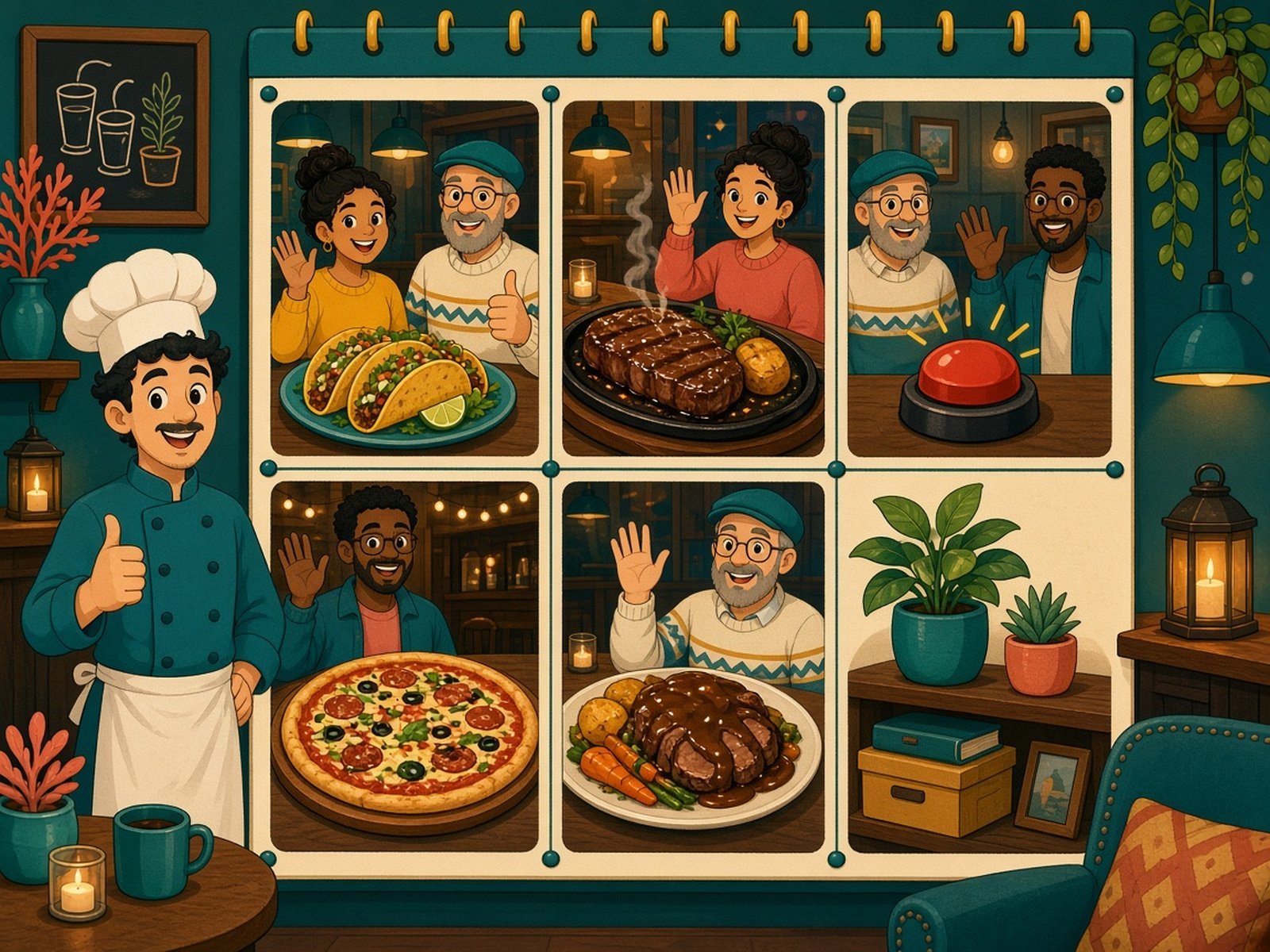
A weekly promotion flips that. Taco Tuesday, Thursday steak night, Sunday roast, or a retailer’s “Friday flowers” special: you set it up once, run it every week, and let it do the heavy lifting.
Why “every week” beats “every now and then”
It saves you time. Once the offer, the photo and the wording are sorted, the weekly effort mostly disappears. You’re running a routine instead of reinventing a campaign.
It builds habits, for your customers and your team. Psychologists who study habits found that repeating a behaviour in the same context makes it automatic over time. In a well-known 2009 study published in the European Journal of Social Psychology, volunteers repeated a daily behaviour in a consistent setting. Among those whose results fitted the model, it took a median of 66 days to reach near-peak automaticity, with a range of 18 to 254 days. Handily, missing one opportunity didn’t materially derail the process.
That research tracked daily habits, not weekly dinners, so don’t expect locals to switch on after two months. But the lesson carries over: consistency and a stable cue (same day, same deal, same place) are what turn “maybe” into “that’s what we do on Tuesdays”. A 2024 systematic review of habit studies points the same way: around two months in several studies, with wide variation between people.
It makes your quiet nights predictable. A regular special gives a slow night its own identity, and your kitchen and floor staff can plan prep and rosters around it.
Setting it up properly
- Pick the right night. Put the promotion on your quietest regular session, not your busiest.
- Make it simple and nameable. “Taco Tuesday” sticks. “15% off selected mains Monday to Wednesday excluding public holidays” doesn’t.
- Cost it once, carefully. Work out the margin at the deal price, and the typical add-ons (drinks, sides, desserts) that come with it.
- Write the conditions upfront. Dine-in only, from 5pm, one per person. Keep it honest: the ACCC’s Advertising and selling guide applies to every price claim.
- Licensed venues: keep it responsible. Build weekly promotions around food or experiences, and check drink offers against NSW’s liquor promotion guidelines.
- Put it everywhere once. Menu, window, website, booking page, social media and local listings, then leave it there.
Set and forget, but don’t neglect
“Set and forget” means you don’t rebuild it every week. It doesn’t mean you never look at it again.
- Monthly: check covers or sales on promo nights against the same night before you started. Is it growing, flat or falling?
- Quarterly: recheck the margin. If ingredient costs have moved, adjust the price or the portion before it hurts.
- Every few months: refresh the photo and wording so it doesn’t fade into the background.
Keeping it fresh without starting over
Keep the core (the day and the name) and rotate the details. Try a “taco of the month”, a seasonal roast, a winter steak cut, or a retail special that follows the seasons. Regulars get something new to talk about, but the habit stays intact.
If a promotion is still flat after a fair run, say three months, change it. A habit can’t form around something nobody wants.
An illustrative example
These figures are illustrative only, not data from a real business.
The Corner Cantina seats 60 and usually does about 22 covers on a Tuesday. The owner launches Taco Tuesday: three tacos for a set price, dine-in only, from 5pm.
- Weeks 1–4: about 28 covers, mostly curious locals.
- Weeks 5–8: about 34 covers, with familiar faces returning.
- Weeks 9–12: about 40 covers, and a few tables now book every week.
Each month the owner spends about 20 minutes reviewing numbers and picking a “taco of the month”. In week ten the avocado price jumps, so the guac becomes an add-on instead of a freebie. The promotion keeps running; the owner keeps their Tuesday evenings sane.
Practical takeaways
- Put weekly promotions on your quietest regular session.
- Make it simple, nameable and consistent: same day, same deal.
- Give it time. Habits take weeks or months, not days.
- Review monthly, recheck margins quarterly and refresh the creative every few months.
- Rotate the details, keep the core.
List it once and let it work
In Store Only (ISO) is a no-commission local deals and directory platform launching in Balmain and Rozelle. You can list your weekly deal or regular event once, and it stays on ISO for locals browsing what’s on nearby, week after week, without a fresh post each time. Locals can also opt in to notifications on instoreonly.com.au and are notified whenever a new listing goes up. Hammock not included.
Discover how to promote your business at instoreonly.biz, and see what’s on locally at instoreonly.com.au.
Local Deals from Local Businesses.
Sources
- Lally, P. et al. (2009), “How are habits formed: Modelling habit formation in the real world”, European Journal of Social Psychology: https://doi.org/10.1002/ejsp.674
- Singh, B., Murphy, A., Maher, C. et al. (2024), “Time to Form a Habit: A Systematic Review and Meta-Analysis of Health Behaviour Habit Formation and Its Determinants”, Healthcare: https://pmc.ncbi.nlm.nih.gov/articles/PMC11641623/
- ACCC, Advertising and selling guide: https://www.accc.gov.au/system/files/Advertising%20and%20selling%20guide%20-%20July%202021.pdf
- Liquor & Gaming NSW, “Liquor promotions”: https://www.nsw.gov.au/business-and-economy/liquor-and-gaming/liquor-licensing/licence-responsibilities/liquor-promotions